
Updated Nov 1, 2026. Buyer’s checklist for riders and runners. Compiled from maker spec pages and help centers checked on Nov 1, 2026; we have not worn or tested these pairs ourselves. Author: The EyeComfy team.
Affiliate disclosure: As an Amazon Associate we earn from qualifying purchases. Some links below are affiliate links. EyeComfy is independent and is not affiliated with, sponsored by or endorsed by Meta, Ray-Ban, Oakley, Amazon or any brand mentioned here.

Quick answer
- Built for sport: Oakley Meta Vanguard: wraparound shape, IP67, and speakers that Meta says are six decibels louder than its other smart glasses.
- Everyday pair that can handle a jog: Oakley Meta HSTN (IPX4) or Ray-Ban Meta (IPX4): fine in light rain, not built for soaking.
- Training data: launch coverage says Vanguard supports activity sharing with Garmin devices and Strava. The glasses don’t replace your watch.
- Safety first: keep audio low enough to hear traffic, and check your local rules on audio devices while riding.
- Eyes: the AAO advises sunglasses with 100% UV or UV400 protection. Ask an eye-care professional about sport eyewear for your needs.
Smart glasses can be good training partners: music and calls without earbuds, voice-controlled photos and video, and on some models live workout stats. But a pair that’s comfortable on a coffee run can slip, fog or let in wind noise at speed. This checklist covers what to look for, using maker specs and US safety guidance. We have not ridden or run in these ourselves.
Not medical or safety advice
We cover gear features only. For eye protection in your sport, or if you have any eye condition, talk to an optometrist or ophthalmologist. The American Academy of Ophthalmology’s sun-safety guide is a good starting point. Follow road rules where you ride or run.
How we research
We compared Meta’s help pages and launch coverage of Meta’s own claims for its sport and everyday frames, and checked US guidance from NHTSA and the AAO. Every claim is quoted in our evidence file. Read more on our how we research page.
The checklist
- Water and sweat rating. Look for the IP rating on the maker page. Meta’s IPX4 models are rated for light rain; Vanguard is IP67.
- Shape and coverage. Wraparound lenses cover more of your side view (our observation, not a lab claim).
- Helmet fit. Check that the temples clear your helmet straps and retention system. Try your actual helmet if you can.
- Audio you can hear over wind, but that still lets you hear traffic. Open-ear speakers sit near the ear rather than in it.
- Wind-handling mics if you take calls or use voice commands on the move.
- Battery for your longest session. Use the continuous-audio figure, not just typical use. See our battery comparison.
- Lens tint for your light. Darker isn’t always better, and tint doesn’t tell you about UV (more below).
- Prescription path if you need correction. See our smart glasses for prescription wearers.
Sport vs. everyday smart glasses
| Oakley Meta Vanguard | Oakley Meta HSTN | Ray-Ban Meta (Gen 3) | |
|---|---|---|---|
| Shape | Sport wraparound | Sporty everyday frame | Lifestyle frames (Wayfarer and others) |
| Water rating | IP67 | IPX4 (splash resistant) | IPX4 (light rain) |
| Battery per charge (Meta’s claim) | Up to 9 h general use / 6 h continuous audio | Up to 8 h | Up to 9 h |
| Wind / audio (Meta’s claim) | Speakers six decibels louder than Meta’s other smart glasses | Not specified for wind | Not specified for wind |
| Workout stats | Activity sharing with Garmin devices and Strava (per launch coverage) | Not a listed feature | Not a listed feature |
| Best for | Regular cyclists and runners | Mixed use, occasional runs | Daily wear, light activity |
From Meta’s help pages and launch coverage of Meta’s claims (GSMArena, UploadVR, Notebookcheck), checked Nov 1, 2026. “Not specified” means we didn’t find a maker claim, not that the feature is poor.
Water, sweat and rain
Meta says Ray-Ban Meta glasses, Meta Ray-Ban Display and Meta Glasses carry an IPX4 rating, which it describes as safe if you get caught in light rain while wearing them. Meta Help — water resistance. UploadVR reports that Oakley Meta HSTN is also IPX4, meaning it can handle splashes but isn’t rated for water jets or submersion (UploadVR). Vanguard is rated IP67, and Engadget’s launch report calls it much more water resistant than its predecessors (Engadget). In the general IP code, the “7” refers to a test with the lowest point of the device 1,000 mm below the water surface (Wikipedia — IP code). That is a lab test, not a swimming rating. Dry the glasses with a soft cloth before you store or charge them, and check Meta’s product page for what the rating covers.
Sweat and road grime build up on lenses and charging contacts. Our cleaning guide covers Meta’s steps.
Wind noise and open-ear audio
Wind is the main reason audio frames that sound fine indoors struggle on a bike. UploadVR’s launch report says Vanguard’s speakers are six decibels louder than Meta’s other smart glasses, making them better suited to hearing audio with wind rushing past. That’s Meta’s claim; we haven’t found independent measurements. UploadVR — Oakley Meta Vanguard.
Hear the road
NHTSA’s bicycle safety page tells riders not to text, listen to music or use anything that takes their eyes, ears or mind off the road and traffic. Open-ear speakers leave your ears uncovered, but loud audio can still mask a car behind you. Keep volume low, pause audio in heavy traffic, and check your state and local rules. NHTSA — bicycle safety.
Training stats: what the glasses do and don’t do
GSMArena’s launch report says Vanguard features activity sharing with Garmin devices and Strava. The glasses don’t track workouts on their own, so you still need the watch or bike computer. Check Meta’s page for which devices and stats are supported in your region. GSMArena — Oakley Meta Vanguard.
Meta’s sport model: wraparound shape, IP67, louder open-ear speakers and Garmin activity sharing.
Everyday Oakley frame with IPX4 splash resistance. A fit for mixed use and the occasional jog.
Helps keep frames from bouncing on rough roads or trails. Make sure it doesn’t cover the speakers or charging contacts.
Lenses, UV and tint
The AAO advises using only glasses that block both UV-A and UV-B rays and are labeled UV400 or 100% UV protection. Tint and darkness are about light and contrast, so check the UV label rather than judging by color. Check the lens spec on each product page, and ask an eye-care professional what fits your sport and eyes, including impact protection. AAO — being EyeSmart in the sun.
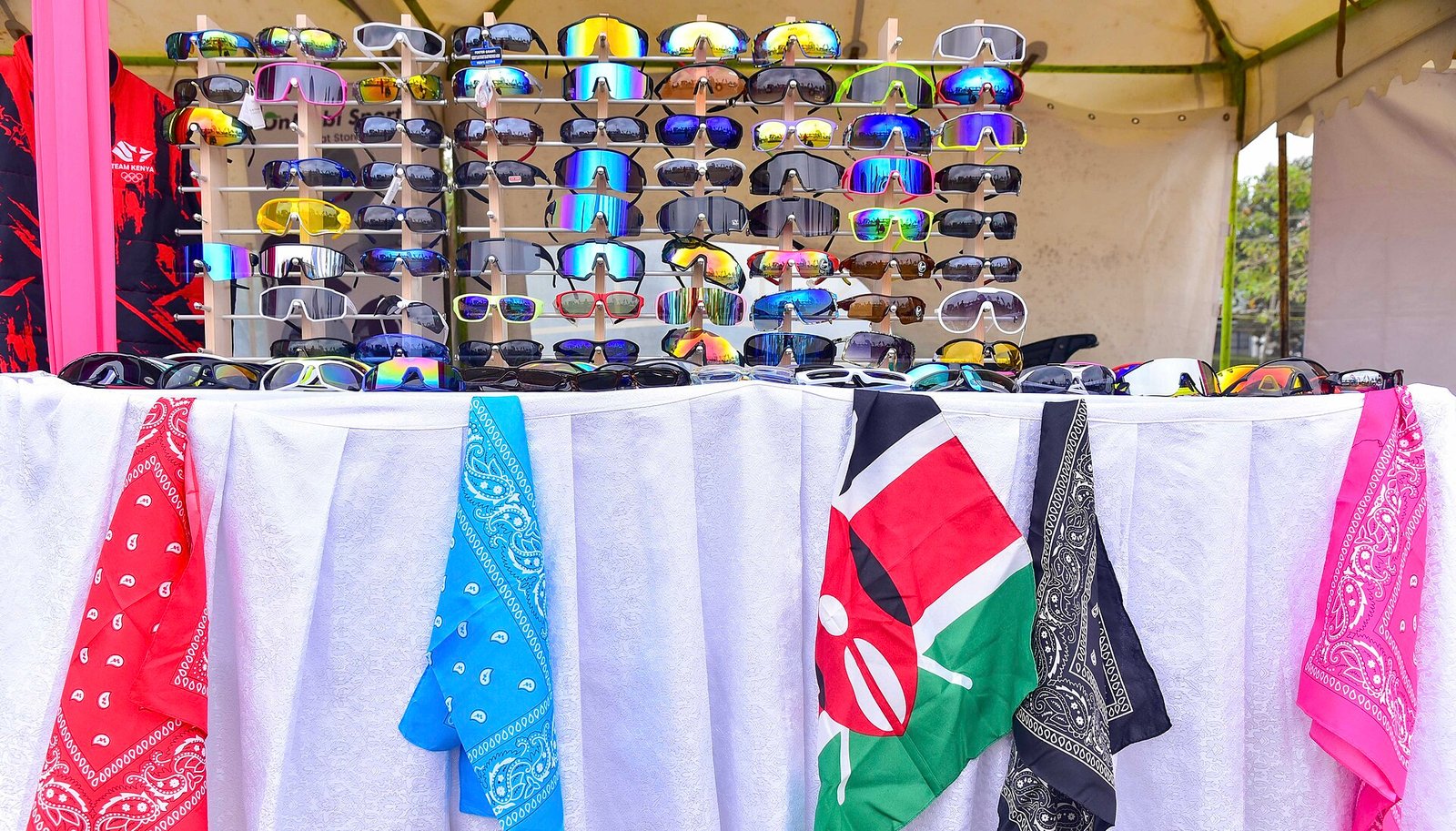
If you ride from day into dusk, check whether the frame you want offers a light-adaptive lens option, and confirm the exact lens spec on the listing.
Fit tips for helmets and long runs
- Try them with your helmet on. Thick temple arms can press against straps or the retention cradle.
- Look for grippy nose pads and check whether the maker sells alternate pads or sizes.
- Check bounce. Jog in place or shake your head: the frames shouldn’t move.
- Frame shape matters too. See our face-shape guide for choosing a frame that suits your face.
Fit tips are our general suggestions, not maker claims.
FAQ
Are Ray-Ban Meta glasses OK for running?
Meta rates Ray-Ban Meta IPX4, which it describes as safe in light rain. That covers casual runs, but a wraparound sport model like Oakley Meta Vanguard is designed for it.
Can I wear smart glasses with a bike helmet?
Often yes, but it depends on your helmet and the frame’s temple arms. Try them together before you commit.
Is it legal to listen to audio while cycling?
Rules vary by state and city. NHTSA’s bicycle safety page advises riders not to listen to music or use anything that takes their ears off the road and traffic. Check local law and keep volume low.
Do smart glasses track my workout?
Not by themselves on the Meta models we checked. Launch coverage says Vanguard supports activity sharing with Garmin devices and Strava.
Do smart glasses lenses protect against UV?
It depends on the lens. The AAO says to use glasses labeled UV400 or 100% UV protection; check the product’s lens spec and ask an eye-care professional if you’re unsure.
Related on EyeComfy
- Ray-Ban Meta vs Oakley Meta
- Best smart glasses for prescription wearers
- Smart glasses battery life compared
- How to clean smart glasses safely
- How we research
Sources (checked Nov 1, 2026)
- Meta Help — About water resistance on AI glasses
- GSMArena — Oakley Meta Vanguard announced
- Engadget — Oakley Meta Vanguard launch report
- UploadVR — Oakley Meta Vanguard official
- UploadVR — Oakley Meta glasses announced
- GSMArena — Oakley Meta HSTN
- Notebookcheck — Ray-Ban Meta (Gen 3)
- Wikipedia — IP code
- NHTSA — Bicycle safety
- AAO — Being EyeSmart in the sun